Identity
One Identity. Controlled Access. Fewer Password Problems.
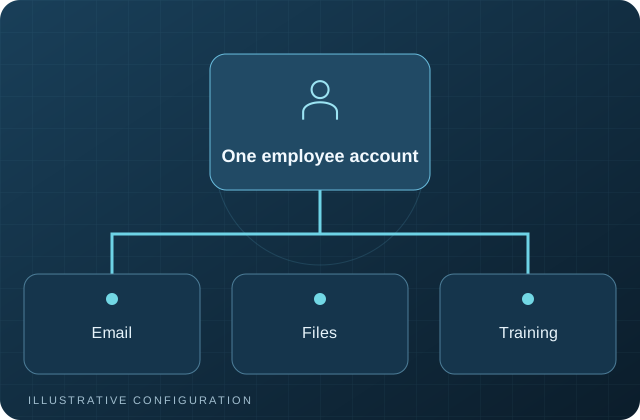
A central identity platform gives employees one managed account and gives the organization a consistent process for granting, reviewing, and removing access.
What This Service Helps You Accomplish
- Simplify employee onboarding and offboarding.
- Reduce scattered accounts and inconsistent password policies.
- Apply role-based access and multifactor authentication where appropriate.
- Connect email, private cloud, training, virtual desktop, and other applications.
Core Capabilities
Central Directory
Active Directory-compatible identity, LDAP, user groups, attributes, and centralized account administration.
Single Sign-On
Keycloak or compatible identity brokering for supported applications.
Multifactor Authentication
Policy-based MFA for supported systems and risk levels.
Account Lifecycle
Documented onboarding, role changes, access review, and deactivation.
Application Integration
OIDC, SAML, LDAP, and application-specific connection methods where supported.
Remote Access Controls
Identity-aware access, VPN integration, session policies, and restricted administrative access.
How Engagements Work
The work starts by inventorying current accounts, applications, user roles, authentication methods, and ownership. A target identity architecture is then built and applications are migrated in controlled groups.
Frequently Asked Questions
Can every application use single sign-on?
No. Integration depends on the application and the protocols it supports. Unsupported systems may continue to use separate credentials.
Can employee accounts be managed centrally?
Yes, for connected systems. Central identity provides one place to create, change, disable, and review accounts.
Does SSO remove the need for security controls?
No. SSO should be combined with MFA, least privilege, logging, secure administration, and appropriate network controls.
Request an Identity Assessment
Map your current employee accounts and identify practical opportunities to centralize access.