Infrastructure

Practical Linux, Virtualization, and Application Hosting

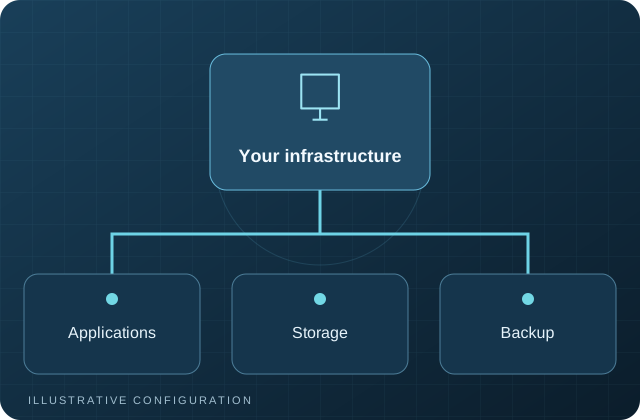
Blue Heron InfoTech designs, deploys, documents, and supports Linux servers, virtual machines, containers, databases, proxies, storage, and business applications.

What This Service Helps You Accomplish

  • Consolidate business applications on documented, supportable infrastructure.
  • Use virtualization and containers where they improve isolation and manageability.
  • Integrate storage, backup, certificates, monitoring, and identity.
  • Plan migrations and capacity without unnecessary complexity.

Core Capabilities

Linux Servers

Debian, Ubuntu, and other appropriate distributions for application and infrastructure roles.

Virtualization and Proxmox

Virtual machines, containers, storage planning, clustering considerations, and backup integration.

Docker and Application Hosting

Compose-based deployments, reverse proxies, networks, volumes, updates, and documentation.

Database Services

PostgreSQL, MariaDB, MySQL, Redis, backup, monitoring, and performance review.

SSL and Reverse Proxies

Certificate management, secure publishing, routing, headers, and access restrictions.

Storage and NAS Integration

Shared storage, backup targets, replication, permissions, and capacity planning.

How Engagements Work

We review the workload, dependencies, data, current hosting, recovery requirements, and support model. The target environment is staged, tested, migrated, documented, and monitored.

Frequently Asked Questions

Do you support existing Linux systems?

Yes, after an assessment of configuration, documentation, access, versions, and technical condition.

Do you use Docker for everything?

No. Containers are selected when they improve deployment, isolation, repeatability, or maintenance.

Can you migrate physical servers to virtual machines?

Often yes, but feasibility depends on operating systems, applications, licensing, hardware dependencies, and downtime constraints.

Discuss Your Server Environment

Review current workloads, hosting, storage, virtualization, and support requirements.